

Prove every play
Sell airtime on figures the buyer builds from the same confirmed plays as you: every opportunity, played or not shown, reported to the buyer, photographs where your CMS supplies them, and money records nobody rewrites.
ExploreA demand partner already on the platform waits in your list, switched off, until you enable it with your own connection details. Hivestack, Vistar and VIOOH can buy your screens through private deals. And plays, the photographs your content management system sends and delivery reports are kept in the same system that sells your screens.
The context
Agencies put their money where buying is easy: one order, one platform, many screens. A small network cannot get every demand partner to build an integration just for it, so its screens stay off the plan, however good they are.
01/03Demand partners already on the platform, ready for you to enable
“Agencies consolidate their plans onto the top networks, and independents like us quietly fall off the schedule.”
A demand partner is registered once for the whole platform and then waits in your organization's list, switched off. You enable it with your own connection details, so the partner does not have to build an integration just for you. A demand partner that speaks the platform's own protocol needs no special integration to be connected at all.
Registering a partner is platform administrator work. It creates one row in a registry shared by every organization on the installation. The partner’s identity and system type are fixed at that moment. Once the row exists, the partner appears in every organization’s list of demand partners, switched off.
Connecting and enabling a demand partnerA buyer that speaks the platform’s own SSP protocol needs no bespoke integration — it is registered under the generic SSP system type, of which any number may exist, and that is the route most new demand partners take.
Built-in adapters for named partners0203
“Agencies that plan on Hivestack, Vistar or VIOOH can buy our screens through private deals.”
Hivestack, Vistar and VIOOH are already registered on the platform, so your organization can sell to each one once it enables it with its own connection details and records the partner's identifier on each face it offers. On a face they buy through a private deal, the partner decides what plays, and the platform records the play and the platform's commission. Their creatives come from the partner and do not pass through your review.
How it works, from the documentation
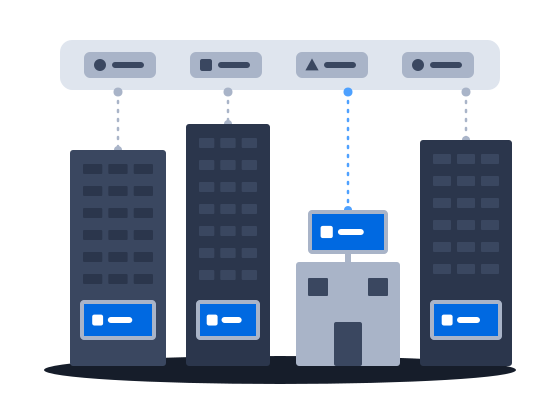
Three demand-partner types carry private deals in CS Context: HiveStack, Vistar and VIOOH, all established programmatic DOOH demand platforms that CS Context calls out to. Each is a single registered partner shared platform-wide, which each organization then enables for itself, with its own connection details.
A private deal occupies a classic slot — sold ahead of time, and skipping the auction entirely. A named demand partner’s own ad server decides what plays; CityScreen Context records that it played and applies its commission.
Creatives arrive from the partner without the usual submission for review: when the partner returns a creative CS Context has not seen before, the platform imports it as a confirmed campaign and shows it from the next opportunity onward.
Private deals (reserved, non-auction fulfillment)“We cannot afford the measurement stack this market now demands, and without it we look like amateurs next to the large networks.”
What happens todayAdvertisers ask for delivery data the big media owners hand over from their own platforms; the independent either buys software that never pays for itself or keeps sending PDFs and losing the brief.
The platform counts each play your content management system confirms. It keeps the photographs your content management system sends, and builds a spreadsheet of what was delivered over any period you ask for.
How it works, from the documentation
The unit of counting is the ad play — a single playback of one advertisement on one face at one moment. Nothing in this section counts people.
Ad-play counting model (one record per playback)A photo capture is the separate, photographic form of evidence. It exists only for the faces whose content management system supplies one, and it does not affect counting or pricing in any way. A campaign with no photo captures at all is counted, reported and billed exactly like one with a full set.
Photo captures (proof-of-play photographs)A report is a spreadsheet of what was delivered over a period, generated on request and kept for thirty days.
Asynchronous XLSX delivery reportsBefore you start
What you doWhy, from the documentation
Enable the partners you want with your own connection details, and admit the ones that bid in a price list
A demand partner has to pass two gates before it can buy anything. The platform operator registers it once, platform-wide. Each organization then enables it for itself, with its own connection details.
Neither gate substitutes for the other. A registered partner no organization has enabled buys nothing; an enabled partner whose registry row is switched off buys nothing either.
Enabling a partner makes it available to the organization. Which of its enabled partners actually see a given face is decided by the price list covering that face, and a price list expresses this in one of two shapes.
An allow list. The priority group names the partners it contains. Only those partners are asked.
A block list. The priority group is marked as an exclusion and names the partners to leave out. Every other partner the organization has enabled is asked.
Connecting and enabling a demand partnerFor a demand partner not yet on the platform, have the platform administrator register it
For Hivestack, Vistar and VIOOH, record the partner's identifier on each face you offer them
Flat-rate & private deals
Delivery, proof-of-play & money
Other scenarios
Sell airtime on figures the buyer builds from the same confirmed plays as you: every opportunity, played or not shown, reported to the buyer, photographs where your CMS supplies them, and money records nobody rewrites.
ExploreProgrammatic on your terms: only the demand partners you enable can buy, on the faces and at the floors your price list sets, sold by a platform that buys no advertising itself.
ExploreA buyer's creatives reach the street after your own departments sign off, on the faces you choose; only the buyers on your automatic approval list and the partners you sell to through private deals skip the queue.
ExploreThe budget rival is the online channel that proves delivery event by event. CS Context gives out-of-home delivery evidence a media buyer can compare with it.
Explore